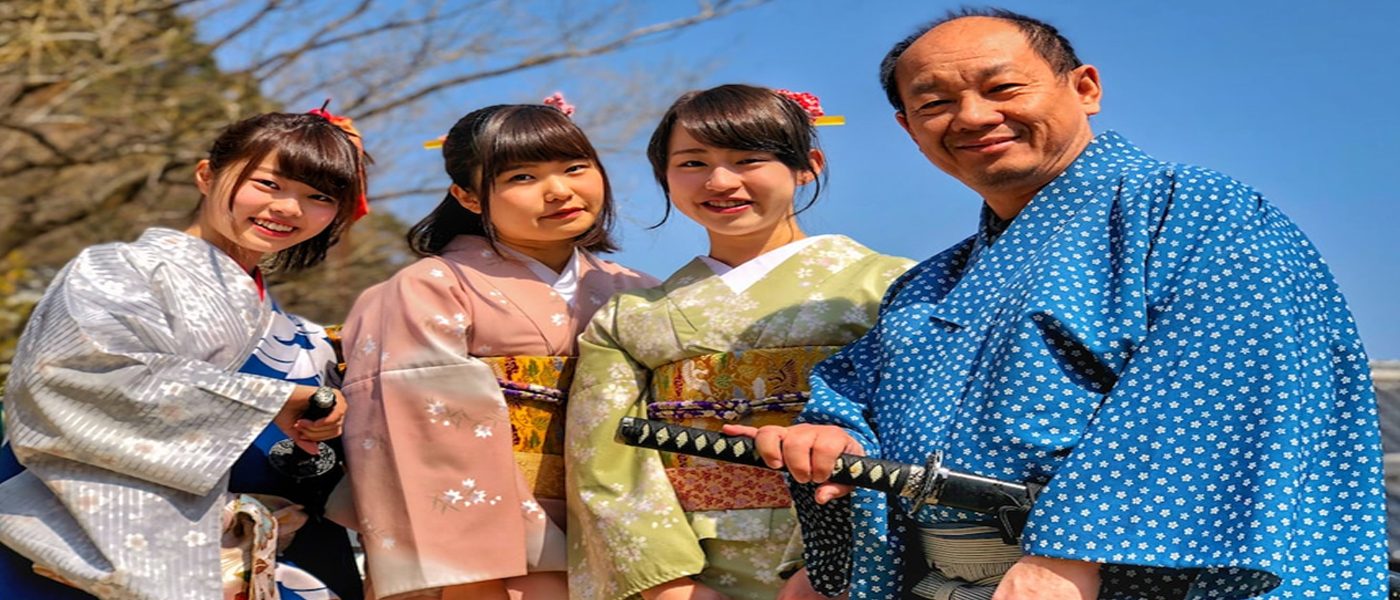
A traditional Japanese kimono features a distinctive T-shaped design with long sleeves, a wrap-around front, and is secured with a wide sash known as an obi. Kimonos are traditionally crafted from fine materials such as cotton or silk and are often decorated with beautiful seasonal motifs, floral patterns, and symbolic designs.
More than simply clothing, the kimono is an enduring symbol of Japanese culture, artistry, and heritage. The fabric, colors, patterns, and style can traditionally reflect the wearer's age, marital status, the season, and the formality of the occasion.
Whether worn for festivals, ceremonies, tea gatherings, or as elegant loungewear, authentic Japanese kimonos remain one of Japan's most treasured cultural traditions.
A yukata is generally a lightweight, casual Japanese garment, traditionally made from cotton and especially popular during the warmer months. Today, yukata are commonly associated with summer festivals, fireworks displays, and other relaxed seasonal occasions. Their lighter construction makes them comfortable and easy to wear in warm weather.
A kimono encompasses a much broader range of garments, from casual styles to highly formal pieces. Traditional kimono may be made from silk or other finely woven fabrics and can feature intricate dyeing, embroidery, weaving, or other decorative techniques. Formal kimono are often worn for weddings, ceremonies, and other significant occasions.
What about the robes at Kimono Shop? At Kimono Shop, we offer a contemporary collection designed with comfort, quality, and everyday wear in mind. Many of our kimono and yukata-inspired robes feature similar lightweight, comfortable fabric weights, making them versatile choices for a variety of climates and lifestyles. Our Premium Line is an exception. These garments feature slightly heavier fabrics and more refined weaves, with select designs incorporating intricate patterns and details that benefit from a higher-quality, more substantial textile.
Ultimately, choosing between a kimono and yukata—or between different fabric weights and styles—comes down to the season, desired level of formality, and personal preference. Our goal is to offer beautiful garments that allow you to enjoy the distinctive aesthetic and craftsmanship of Japanese-inspired clothing in a way that fits your individual style.
WHAT IS A YUKATA?
A yukata is a lightweight, casual Japanese kimono traditionally made from 100% cotton. Originally worn after bathing at Japanese hot springs, yukatas have become a popular choice for summer festivals, fireworks displays, and relaxing at home.
Unlike formal silk kimonos, yukatas are breathable, comfortable, and easy to wear, making them ideal for warm weather and everyday use. They feature the same wrap-style design and are typically worn with an obi belt.
Today, yukatas are enjoyed around the world as stylish robes, spa wear, loungewear, and authentic Japanese clothing.
WHAT IS A HAPPI COAT?
A Happi Coat (sometimes spelled Happy Coat) is a shorter version of the traditional Japanese kimono. Originally worn by craftsmen, merchants, and festival participants, happi coats are known for their lightweight comfort and distinctive Japanese designs.
While traditional kimonos and yukatas generally measure 54 to 64 inches in length, happi coats are typically 35 to 45 inches long, making them ideal for use as lightweight jackets, casual robes, or everyday loungewear.
Happi coats often feature bold prints, Japanese symbols, kanji characters, or traditional family crests. Today they are popular for festivals, cultural events, martial arts, cosplay, spa wear, and contemporary fashion, offering a perfect blend of traditional Japanese style and modern comfort.
ARE KIMONO AND YUKATA ONLY FOR SPECIAL OCCASIONS?
Not at all! While kimono and yukata are often worn for festivals, ceremonies, and other special occasions, they're also popular for everyday comfort and style.
Many of our customers wear them as:
They also make unique and memorable gifts for Mother's Day, Father's Day, birthdays, bridesmaids, groomsmen, and other special occasions.
In addition, our robes are frequently purchased for weddings, spa retreats, themed events, promotional campaigns, and theater or film productions.
Whether you're relaxing at home, celebrating a special occasion, or looking for a distinctive gift, our Japanese-style robes are designed to be as versatile as they are timeless.
ARE KIMONO AND YUKATA UNISEX? CAN MEN AND WOMEN WEAR THE SAME STYLES?
Yes! Many of our kimono, yukata, and robes are versatile styles that can be enjoyed by anyone. While we organize some designs into men's and women's collections to make shopping easier, the choice ultimately comes down to personal style, preferred fit, and comfort.
Several of the designs featured in our men's collection are especially popular with women, including:
Sizing Tip: If you are considering a style from our men's collection, keep in mind that the cut and sizing are designed with a men's fit in mind. Women who prefer a more tailored or fitted look may want to consider sizing down. For the best fit, we recommend checking the individual garment's size chart and measurements before ordering, as sizing can vary by style.
Ultimately, there are no hard rules about who can enjoy a particular color, pattern, or design. Choose the garment that speaks to your personal style and makes you feel comfortable and confident.
CHOOSING THE RIGHT KIMONO OR YUKATA
HOW DO I CHOOSE THE RIGHT KIMONO OR YUKATA SIZE?
WHAT SIZES ARE AVAILABLE FOR KIDS KIMONO AND YUKATA?
We offer children's yukata in the following sizes:
SIZES FOR TWEENS AND TEENS
For older children and teenagers, our adult sizes are often the best option. Depending on height and preferred fit, consider:
Happi Coats: A shorter-length robe that's a great option for shorter individuals.
Extra Small or Small Yukata: Ideal for tweens and teens who are ready for adult sizing, with room for growth. If you're between sizes or unsure which size to choose, refer to the measurements in the product description to find the best fit.
WHAT CAN I DO IF MY KIMONO OR YUKATA IS TOO LONG?
If your kimono or robe is longer than you prefer, don't worry; a longer length can usually be adjusted. Our robes are finished with a straight hem, making them relatively straightforward to shorten.
For the best results, we recommend taking your garment to a local tailor or professional alteration shop. A skilled tailor can adjust the length while maintaining a clean, finished hem. If you are comfortable sewing, you can also alter it yourself.
Prefer Not to Alter Your Kimono?
That's perfectly fine! If the fit or length isn't right for you, we offer hassle-free returns and exchanges. Simply contact us within 15 days of receiving your order to request a Return Authorization.
We recommend trying your kimono on before making any alterations. Once a garment has been altered, it is no longer eligible for return or exchange.
For complete details, please see our Returns & Exchanges Policy or contact our customer service team—we're happy to help you find the best fit.
WHERE ARE YOUR KIMONO AND YUKATA MADE?
Most of our robes are crafted from 100% premium Japanese cotton, while select collections are available in luxurious 100% silk for those seeking a more formal or elegant garment.
We have built long-standing relationships with trusted Japanese manufacturers known for their exceptional craftsmanship, high-quality fabrics, and attention to detail. Every robe is carefully produced to reflect the beauty, authenticity, and timeless tradition of Japanese textile artistry.
When you purchase from KimonoShop.com, you can shop with confidence knowing you're receiving genuine Japanese-made apparel designed for lasting comfort, beauty, and quality.
Our authentic Japanese kimono and yukata robes are proudly made in Japan by experienced artisans using traditional manufacturing techniques.
DO YOU SELL CHINESE-MADE KIMONO OR YUKATA?
We carefully select our products based on where they are made, the craftsmanship involved, and the standards maintained throughout the supply chain. As part of that commitment, we do not currently source kimono products manufactured in China.
Our goal is to offer customers genuine Japanese garments that reflect Japan's rich textile traditions while supporting responsible and transparent sourcing practices.
If you are specifically looking for Chinese-manufactured kimono-style garments, you may find a wider selection through large online marketplaces such as Amazon or Etsy. However, we encourage shoppers to review individual product descriptions carefully to confirm a garment's country of manufacture, materials, and provenance.
No. Our collection exclusively features "authentic kimonos sourced from Japan", with a focus on Japanese craftsmanship, quality, provenance, and responsible sourcing.
DO YOU BUY OR SELL VINTAGE or USED KIMONOS?
Over the years, we’ve found that buying and selling used kimonos can be challenging, particularly when it comes to evaluating condition. When shopping for used clothing in person, you have the opportunity to inspect the garment yourself. With online purchases, however, determining the true condition of a used kimono can be much more difficult. Terms such as “excellent condition,” “very good,” or “vintage” can also mean different things to different sellers and buyers.
We’re not here to criticize the used-kimono market—it simply isn’t the focus of our business. At Kimono Shop, we specialize in new, clean, high-quality Japanese clothing that is ready to wear. This allows us to maintain consistent standards for quality, condition, and customer satisfaction.
If you’re interested in learning more about vintage and used kimonos, we invite you to explore our blog, where we share additional information and insights on Japanese clothing and kimonos.
No. Kimono Shop does not buy or sell used or vintage kimonos.
OBI and HOW TO WEAR YOUR KIMONO
WHAT IS AN OBI?
Available in a variety of colors, patterns, widths, and styles, an Obi can add elegance, contrast, and personality to an outfit. Depending on the garment and occasion, the way an Obi is styled can range from simple and casual to formal and elaborate.
For those looking to create a more traditional or distinctive look, an Obi is a beautiful way to complement your kimono or yukata while adding a polished finishing touch.
An Obi is a traditional Japanese sash worn around the waist with kimono and yukata. It helps secure and shape the garment while also serving as an important decorative element.
WHAT ARE THE DIFFERENT TYPES OF OBI?
Nagoya Obi: The Nagoya Obi is a versatile style that is generally less formal than a Fukuro Obi. Its distinctive construction makes it easier to wrap and tie, making it a popular choice for semi-formal and everyday kimono wear. Nagoya Obi are available in a wide range of fabrics and patterns, from understated designs to more elaborate styles.
Hanhaba Obi: The Hanhaba Obi is a narrower, more informal sash that is especially popular with yukata. Because it is lightweight and relatively simple to tie, it is an excellent choice for casual occasions, summer festivals, and relaxed seasonal wear. Its narrower profile also allows for a variety of playful and contemporary styling options.
Fukuro Obi: The Fukuro Obi is a wider, more formal style traditionally associated with special occasions. Often crafted from luxurious fabrics such as silk and featuring intricate woven or embroidered designs, Fukuro Obi are commonly worn with formal kimono for celebrations, ceremonies, and other important events.
Obi come in a variety of widths, lengths, fabrics, and levels of formality. The right Obi depends on the garment you are wearing, the occasion, and the look you want to create. Here are three of the most common types:
WHICH OBI IS RIGHT FOR ME?
Whichever style you choose, an Obi does more than help secure a garment—it can dramatically enhance the overall silhouette and provide an opportunity to add color, contrast, pattern, and personal style to your kimono or yukata.
For a casual yukata or relaxed look, a Hanhaba Obi is often a natural choice. For everyday or semi-formal kimono wear, a Nagoya Obi offers versatility and elegance. For formal occasions, a Fukuro Obi provides a more sophisticated and traditional finish.
WHAT DO THE COLORS AND PATTERNS ON AN OBI MEAN?
Color and Formality
Seasonal Patterns
More Than Decoration
While traditional guidelines provide helpful context, there is no single meaning assigned to every color or pattern. Modern kimono wearers and designers continue to combine colors and motifs in creative ways, making the Obi both a connection to Japanese textile traditions and an expression of individual style.
The colors, patterns, and fabrics used in an Obi can communicate a sense of season, occasion, formality, and personal style. Traditionally, certain colors and motifs have also been associated with age and life stage, although these conventions are not absolute and have evolved.
Brighter, more vibrant colors are traditionally associated with youthful and festive styles, while softer or more subdued tones may be chosen for mature, elegant, or formal looks. Today, however, Obi are available in an extraordinary range of colors, and personal preference plays an increasingly important role in how they are styled.
Nature-inspired motifs are especially important in Japanese textile traditions. Flowers, plants, landscapes, and other natural imagery may evoke a particular season or time of year.
For example, cherry blossoms are strongly associated with spring, while maple leaves are traditionally connected with autumn. Other motifs, such as chrysanthemums, plum blossoms, bamboo, cranes, and waves, can carry their own cultural or symbolic associations.
An Obi can be much more than a beautiful finishing touch. Its color, pattern, fabric, and styling can complement the kimono, reflect the season or occasion, and create contrast within the overall ensemble.
HOW DO YOU TIE OR KEEP A KIMONO CLOSED?
For a more formal, traditional, or distinctive style, you can also pair your garment with an Obi, a wider sash traditionally worn with kimono. We offer Obi in a variety of colors, allowing you to create a classic look or add a contrasting accent to your outfit. Obi are available separately.
Our Yukata, kimono, and Happi Coats each come with a coordinating belt or sash to help secure the garment and complete the look.
CARING FOR YOUR KIMONO OR YUKATA
HOW DO I CARE FOR MY KIMONO OR YUKATA?
Cotton Kimono & Yukata
After washing, hang or drip-dry whenever possible. A kimono hanger is an excellent choice because it allows the garment to dry naturally while helping maintain its shape. If using a dryer, choose the lowest heat setting and remove the garment promptly to minimize shrinkage and wrinkles.
Silk Kimono
We do not recommend machine washing silk. While some silk garments may be suitable for gentle hand washing, this should only be done when the garment's care instructions specifically allow it, as water can affect certain dyes, finishes, and delicate fabrics.
A Few Additional Care Tips
To help protect your kimono or yukata between wears:
When in doubt, follow the care instructions provided with your specific garment. Taking a little extra care will help preserve the beauty and character of your kimono or yukata for many years.
Proper care will help preserve the color, fabric, and craftsmanship of your kimono or yukata for years to come. Because care requirements can vary by fabric and garment, we always recommend checking the care label and following any specific instructions provided with your purchase.
For cotton garments, we generally recommend washing in cold water on a gentle cycle with a mild detergent. Avoid harsh chemicals or bleach, which can affect the fabric and colors.
Silk requires more delicate care. Professional dry cleaning is generally recommended, particularly for formal, vintage, or intricately decorated kimono.
ORDERING AND SHIPPING
WHEN WILL MY KIMONO or YUKATA ORDER SHIP?
Most orders are shipped within one business day of being placed, and many are shipped the same business day.
Our warehouse processes orders every business day. Shipping times may vary slightly depending on order volume, carrier pickup schedules, holidays, and other seasonal demand. Still, we always strive to get your order on its way as quickly as we can.
DO YOU OFFER FREE SHIPPING IN THE USA?
WHY BUY FROM KIMONO SHOP?
WHY CHOOSE KIMONO SHOP FOR YOUR KIMONO OR YUKATA?
Here is why customers choose us:
When you shop at Kimono Shop, you're buying from a company with decades of experience, a commitment to customer satisfaction, and a genuine appreciation for Japanese craftsmanship. Shop with confidence—we look forward to serving you!
WHY BUY FROM KIMONO SHOP INSTEAD OF DIRECTLY FROM JAPAN?
Here’s what you can expect:
At Kimono Shop, we eliminate the guesswork and international shipping hassles. You get authentic Japanese robes, fast U.S. shipping, straightforward returns, and customer support from a company that has been serving customers for more than 30 years.
Shop Kimono Shop with confidence and enjoy the convenience of buying authentic Japanese robes from a trusted U.S. retailer.
We know you're excited to receive your order, so we work hard to ship it as quickly as possible.
Yes! We offer FREE Shipping anywhere in the USA on orders of $75.00 or more. This includes kimonos, yukatas, happi coats, and all other products. This includes Alaska and Hawaii.
Serving customers since 1994, Kimono Shop is a USA-based company specializing in authentic Japanese kimonos, yukata, and happi coats. For more than 30 years, we've been committed to offering authentic kimonos, excellent service, and a shopping experience you can trust.
When you shop with Kimono Shop, you’re buying from a trusted, U.S.-based retailer with 33 years of experience selling robes online. That means you get the quality and selection you’re looking for, without the added uncertainty of ordering from overseas.
We regularly hear from customers who have experienced high international shipping costs or difficulties returning items purchased directly from Japan. For example, returning a relatively small 2 lb. package to Japan can cost $50–$90 through USPS, depending on the service, insurance, and tracking selected.
Malas are made from a wide variety of natural and decorative materials, including wood, seeds, stone, minerals, gemstones, crystal, glass, and more. Each material, color, and design can carry its own symbolism, allowing you to choose a mala that has personal meaning to you.
Traditionally, a mala necklace contains 108 beads, along with a larger or distinctive guru bead, which marks the beginning and end of the meditation cycle. Malas can also be made into bracelets and are worn by people of all genders as both meaningful accessories and reminders of personal intentions.
WHAT IS THE MEANING OF MALA BEADS?
The number 108 holds special significance in many spiritual traditions, although malas can be made with different numbers of beads as well. The guru bead is often viewed as a symbol of guidance, wisdom, or the teacher.
For many people today, wearing a mala is about more than its traditional purpose. It can serve as a personal reminder of an intention, a spiritual practice, a period of growth, or something for which they are grateful.
Mala beads have a long history of use in Buddhist and other Indian spiritual traditions as tools for meditation, prayer, and mindfulness. The Sanskrit word mala means “garland,” reflecting the beads' traditional arrangement.
WHY USE MALA BEADS?
Each bead provides a physical point of focus. As you move from one bead to the next, the repetitive motion can help quiet distractions and encourage a deeper sense of mindfulness and concentration.
Mala beads can also be worn throughout the day or carried with you as a tangible reminder of your intentions, beliefs, gratitude, or personal journey.
One of the primary purposes of mala beads is to help with meditation and prayer. Using the beads to count repetitions allows you to focus your attention on your mantra, prayer, breath, or intention rather than keeping track of the number of repetitions.
HOW DO YOU USE MALA BEADS?
1) Begin with the bead next to the guru bead.
The beads do the counting for you, allowing you to focus your attention on your words, breath, or intention rather than on keeping track of repetitions.
There is no single “right” way to incorporate a mala into your personal practice. Some people use their mala during formal meditation, while others simply wear or carry it as a meaningful reminder throughout the day.
Using mala beads is simple and can be adapted to your own meditation or prayer practice.
2) Hold the mala comfortably in your hand. Traditionally, the beads are moved using the thumb and middle finger, although you may use whatever feels comfortable and respectful to your practice.
3) Choose a mantra, prayer, affirmation, or intention to repeat.
4) Recite your mantra or prayer once, then gently move to the next bead.
5) Continue moving from bead to bead, using each bead to mark one repetition.
6) When you reach the guru bead again, you have completed one full cycle.
WHAT DO THE COLORS OF MALA BEADS SYMBOLIZE?
Some commonly associated meanings include:
These meanings are not universal, and the symbolism of a particular color or gemstone can vary depending on cultural and spiritual traditions. Ultimately, the meaning you personally give to your mala can be the most meaningful of all.
Colors can carry different meanings and associations across cultures and traditions. Their significance is also deeply personal.
WHAT IS MEANINGFUL JEWELRY?
A necklace might be meaningful because it was a heartfelt gift from someone you love. A pair of earrings might remind you of a special journey or milestone. A bracelet may hold significance because it was handcrafted by an artisan whose work and story you admire.
At Kimono Shop, we believe jewelry should be beautiful and meaningful. That's why we carefully curate a collection of distinctive pieces chosen for their authenticity, craftsmanship, cultural significance, and the stories behind them.
We seek out jewelry created by talented artisans and craftspeople, including designers whose work reflects their heritage, creativity, and dedication to their craft. Whenever possible, we choose pieces that help support the people and communities behind them, allowing their artistry and traditions to be celebrated and appreciated.
We hope that the jewelry you find at Kimono Shop becomes part of your story.
Whether a piece represents love, friendship, a cherished memory, personal growth, protection, gratitude, or simply something that speaks to your heart, meaningful jewelry can serve as a beautiful reminder of the people, experiences, and intentions that matter most.
Meaningful jewelry goes beyond simple adornment. It carries stories, emotions, memories, and connections that make a piece truly special to the person wearing it.
WHY CHOOSE A MALA OR MEANINGFUL PIECE OF JEWELRY?
A mala might remind you to slow down, be present, or stay connected to an intention. A gemstone bracelet might symbolize strength or growth. A handcrafted necklace might remind you of someone special or a memorable place.
Whatever meaning you give it, we hope the pieces you discover at Kimono Shop bring you connection, inspiration, joy, and a deeper appreciation for the artistry and intention behind each creation.
The most meaningful jewelry is often the piece that makes you feel something.